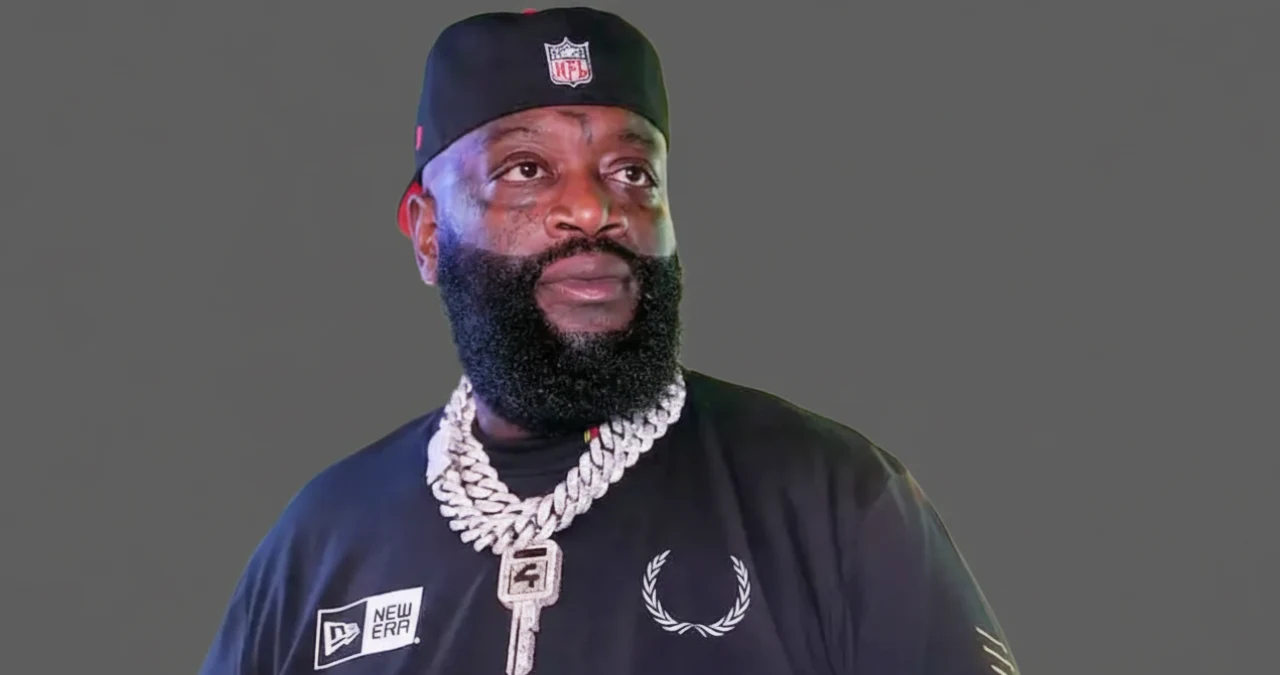

Rick Ross isn’t just a rapper—he’s a living symbol of hustle, power, and transformation. From his humble beginnings in Carol City, Florida, to becoming one of hip-hop’s most influential moguls, Ross has built an empire that stretches far beyond music. Known for his deep, commanding voice and larger-than-life persona, “The Boss” has turned ambition into art, inspiring millions around the world. In this blog, we’ll uncover the top 15 most fascinating facts about Rick Ross—from his early life and breakout hits to his business empire, health journey, and legacy in the world of hip-hop. Get ready to dive deep into the life of a man who truly lives by his mantra: Every day I’m hustlin’.
Table of Contents
1. The Early Life of Rick Ross
Rick Ross, one of the most iconic figures in hip-hop, was born as William Leonard Roberts II on January 28, 1976, in Clarksdale, Mississippi. However, he grew up in Carol City, Florida, a neighborhood just north of Miami known for its rough environment and strong street culture. Growing up in Carol City shaped Ross’s perspective and influenced the raw authenticity you hear in his lyrics today. Unlike many rappers who stumbled into music by accident, Ross always had a vision. He wanted success, power, and influence, and he saw hip-hop as the gateway to that dream.
In his early years, Ross was influenced by Southern rap legends like 8Ball & MJG, Scarface, and Luther Campbell. His environment taught him to hustle early—whether that meant finding creative ways to make money or avoiding the pitfalls of street life. These experiences later became the blueprint for his lyrical themes: ambition, luxury, and survival. Despite the odds, Ross never lost sight of his goals, turning his real-life hustle into art that would later inspire millions.
2. Rick Ross’ Real Name and Background
Before he became the boss of Maybach Music Group, Rick Ross was just William Leonard Roberts II. His stage name “Rick Ross” has an interesting backstory. It was inspired by a real-life drug trafficker named “Freeway” Rick Ross, a notorious figure from the 1980s Los Angeles drug scene. However, the rapper’s persona is purely artistic—a character that represents power and opulence, rather than criminal activity. This decision sparked a legal dispute later, as the real Freeway Rick Ross sued the rapper for using his name, though the court ultimately ruled in favor of the rapper, recognizing “Rick Ross” as a form of creative expression.
His transformation from William Roberts to Rick Ross was more than a name change—it was a reinvention. The stage name helped him craft an image that mirrored the larger-than-life luxury, success, and authority that would define his music. Ross used that persona to project confidence and dominance in the rap game, making “Rick Ross” not just a rapper, but a brand.
3. Rick Ross’ Career Before Rap
Before Rick Ross was known for his booming voice and luxury-laced lyrics, he actually worked as a correctional officer in the mid-1990s. This revelation shocked fans when it surfaced years later, as it seemed to contrast sharply with the drug kingpin persona he rapped about. However, Ross has openly stated that his time in law enforcement was simply a job—a means to earn income during tough times. It was not a reflection of his identity, but rather a steppingstone toward something greater.
The controversy surrounding his correctional officer past didn’t derail his career; in fact, it made him even more intriguing. Ross flipped the narrative by focusing on his music and letting success speak for itself. His resilience in the face of backlash showed that authenticity in hip-hop isn’t just about one’s past—it’s about how you own your story and turn it into something powerful.
4. How Rick Ross Entered the Rap Scene
Rick Ross’s entry into the rap scene was nothing short of explosive. His debut single “Hustlin’,” released in 2006, was an instant hit, featuring the unforgettable hook, “Every day I’m hustlin’.” The song’s infectious beat and street-smart lyrics caught the attention of major record labels, sparking a bidding war that ultimately ended with Ross signing to Def Jam under Jay-Z’s leadership. Jay-Z saw Ross’s potential immediately, recognizing his unique voice and commanding presence as assets that could dominate the charts.
“Hustlin’” became more than just a song—it was an anthem. It spoke to everyone chasing success, no matter their circumstances. That single paved the way for Ross’s debut album, Port of Miami, which debuted at No. 1 on the Billboard 200. From that moment, Rick Ross was no longer just another Southern rapper; he was a national figure and a force in hip-hop.
5. Rick Ross’ Biggest Albums and Chart Success
Rick Ross has built one of the most consistent and respected discographies in modern rap. His debut album Port of Miami (2006) was a commercial triumph, establishing his sound—luxurious, cinematic, and unapologetically bold. He followed it with Trilla (2008), Deeper Than Rap (2009), and Teflon Don (2010), each album elevating his artistry and influence. Teflon Don, in particular, is often considered his magnum opus, with hits like “Aston Martin Music” and “BMF (Blowin’ Money Fast)” becoming hip-hop classics.
Over the years, Ross continued releasing high-quality projects such as God Forgives, I Don’t (2012), Mastermind (2014), and Rather You Than Me (2017). His ability to blend luxury rap with raw street realism made his music appealing to both mainstream listeners and hardcore hip-hop fans. His chart dominance and consistency prove one thing—Rick Ross isn’t just a rapper; he’s a musical architect who has built an empire through sound.
6. Rick Ross as a Businessman
Rick Ross isn’t just a rapper—he’s a true entrepreneur. Beyond his music career, he’s built a financial empire that rivals some of the biggest names in entertainment. His most successful venture is undoubtedly Maybach Music Group (MMG), a record label he founded in 2009. MMG became a powerhouse in the hip-hop industry, signing popular artists like Meek Mill, Wale, and Omarion. The label’s success proved Ross’s sharp business instincts and his ability to identify raw talent. Under his guidance, MMG became synonymous with high-quality hip-hop, luxury, and ambition.
But music isn’t his only source of income. Ross has heavily invested in the food and restaurant industry, particularly with Wingstop franchises. He reportedly owns over two dozen Wingstop locations across the United States, earning millions annually. He’s also ventured into other franchises like Checkers and Rally’s, showing that his business acumen stretches far beyond the studio. Additionally, he’s been active in real estate, purchasing multi-million-dollar properties, including a 235-acre mansion in Georgia once owned by boxing legend Evander Holyfield. Ross often refers to himself as a “mogul,” and rightfully so—his empire includes music, food, real estate, and branding.
Ross’s ability to transition from rapper to businessman is what sets him apart. He’s constantly reinventing himself, proving that success isn’t limited to the microphone—it’s about building lasting wealth and influence. His business empire is living proof that hip-hop can be more than music—it can be a pathway to generational wealth.
7. Rick Ross’ Signature Style and Persona
When you think of Rick Ross, you immediately imagine luxury, power, and confidence. His persona, “The Boss,” has become one of the most recognizable in hip-hop culture. From his deep, authoritative voice to his tailored suits and massive gold chains, everything about Ross screams success. He built his image around the finer things in life—private jets, exotic cars, and expensive champagne—and his fans love him for it. Unlike some artists who only rap about wealth, Ross embodies it in every aspect of his brand.
But it’s not just about flash. Ross’s persona also represents resilience and self-belief. He’s often used his music to motivate listeners to rise above struggle, chase their dreams, and embrace their inner boss. Songs like “Hustlin’” and “The Boss” have become anthems for entrepreneurs and dreamers worldwide. Ross’s lyrics tell stories of triumph, persistence, and confidence, encouraging his fans to take control of their destinies.
His influence also extends to fashion and lifestyle. Ross is known for his distinct beard, sharp dress sense, and bold accessories. He’s been featured in luxury brand campaigns and has even become a style icon in the world of hip-hop. Rick Ross’s persona isn’t just an act—it’s a lifestyle, and he’s mastered the art of blending authenticity with aspiration.
8. Health Struggles and Recovery
Despite his success, Rick Ross’s journey hasn’t been without challenges—especially when it comes to health. In 2011 and again in 2018, Ross suffered from a series of seizures that landed him in the hospital multiple times. These incidents shocked fans and raised concerns about his well-being, especially given his high-energy lifestyle. For a while, rumors about his condition circulated widely, but Ross later revealed that he had been overworking himself, not sleeping enough, and neglecting his diet.
After these wake-up calls, Ross decided to take control of his health. He adopted a healthier lifestyle, incorporating exercise, portion control, and better sleep habits into his daily routine. Through dedication and consistency, Ross lost over 100 pounds—a transformation that inspired many of his fans. He often speaks about his journey, emphasizing that success means nothing without health.
In interviews, Ross credits his turnaround to discipline and a new perspective on life. He started sharing glimpses of his workouts, healthier meals, and balanced routines on social media, proving that even the “Boss” had to make sacrifices to stay strong. His story is a powerful reminder that real wealth isn’t just about money—it’s about taking care of yourself physically, mentally, and spiritually.
9. Rick Ross’ Controversies and Legal Issues
Rick Ross’s career, like many in hip-hop, has been marked by its share of controversies and legal battles. From the early lawsuit with the real “Freeway” Rick Ross to industry feuds and arrests, the rapper has faced plenty of public scrutiny. One of his most talked-about controversies came when his past as a correctional officer was exposed. Many fans questioned his street credibility, but Ross handled the situation with composure. Instead of letting it ruin his image, he doubled down on his music and proved his worth through consistent hits and undeniable talent.
Ross has also been entangled in legal issues, including arrests for drug possession, assault, and weapon charges over the years. However, most of these incidents were either dismissed or resolved, allowing him to maintain focus on his career. Beyond legal troubles, Ross has also been involved in rap beefs, notably with 50 Cent, Jeezy, and Birdman. These rivalries often made headlines but also helped fuel his popularity, keeping his name buzzing in hip-hop circles.
Despite the setbacks, Rick Ross has always bounced back stronger. He’s used controversy as motivation, channeling it into music that reflects both his struggles and his triumphs. His ability to maintain relevance through adversity is a testament to his resilience. Every challenge he’s faced has only added another layer to his legendary story.
10. Rick Ross’ Relationship with Other Rappers
Rick Ross has built an impressive network of relationships in the music industry. His collaborations read like a “who’s who” of hip-hop royalty—Jay-Z, Drake, Kanye West, Lil Wayne, and Meek Mill, to name a few. These partnerships have produced some of the biggest anthems in modern rap, including “Devil in a New Dress” with Kanye West, “Aston Martin Music” with Drake, and “Maybach Music” with Jay-Z. Ross has a knack for elevating tracks with his commanding delivery, turning collaborations into timeless classics.
However, not all his industry relationships have been smooth. Ross has been at the center of several high-profile feuds, particularly with 50 Cent, who mocked Ross’s past as a correctional officer. The feud escalated into public insults, diss tracks, and even lawsuits. Despite this, Ross managed to rise above it all, focusing on his artistry and business ventures. Over time, he’s reconciled with several former rivals, including Jeezy, showing maturity and growth.
Today, Ross is seen as a mentor and leader in hip-hop. Through MMG, he’s guided artists like Meek Mill and Wale to stardom. His collaborative spirit and willingness to uplift others have cemented his reputation as not just a rapper, but a true figure of leadership in the music world. His relationships, both good and bad, have helped shape the evolution of modern hip-hop.
11. Rick Ross’ Family and Personal Life
Behind the boss persona, Rick Ross is a family man who deeply values his loved ones. He has several children, and though he keeps much of his personal life private, it’s clear that fatherhood plays a huge role in who he is. Ross often shares glimpses of his children on social media, expressing how much they motivate him to keep pushing harder. He has spoken openly about wanting to build generational wealth so that his kids can have the financial stability and freedom that he never had growing up in Carol City.
Ross’s family life has not been without its ups and downs. He has been linked romantically to several women over the years, including Lira Galore and Briana Camille, and some of his relationships have made headlines. Despite occasional public disputes, Ross has shown that he takes his role as a father seriously, often emphasizing the importance of responsibility and legacy. His lavish lifestyle may get the spotlight, but at his core, Ross’s motivation stems from love for his family and the desire to give them a better future.
What stands out most about Rick Ross is how he balances fame, business, and family. He’s a man who built an empire from the ground up, yet still finds time to celebrate birthdays, attend his children’s milestones, and offer wisdom to his fans. In interviews, he’s said that his success means little if he can’t share it with those closest to him. This softer, more grounded side of Rick Ross reminds the world that even the biggest bosses have a heart—and that family remains the foundation of his empire.
12. Rick Ross’ Impact on Modern Hip-Hop
Rick Ross has left a permanent mark on hip-hop culture. Since his debut in the early 2000s, he has influenced how rappers present themselves, both lyrically and stylistically. Before Ross, luxury rap was mostly dominated by East Coast artists. He brought a Southern flavor to it, blending tales of hustling with vivid depictions of wealth and power. His music introduced a cinematic feel to hip-hop—each verse sounding like a scene from a movie filled with ambition, risk, and reward.
Ross also paved the way for many upcoming artists through Maybach Music Group (MMG). Under his mentorship, rappers like Meek Mill and Wale developed into chart-topping artists with their own unique sounds. His label became a breeding ground for creativity, unity, and business savvy, showing that collaboration could elevate everyone involved. Ross’s influence also extends to production—his ability to pick beats that sound grand and symphonic has inspired a generation of artists to treat rap like a luxury art form.
Beyond music, Rick Ross’s cultural impact can be felt in fashion, branding, and entrepreneurship. His bold image—designer suits, gold accessories, cigars, and confidence—redefined what it means to be a hip-hop mogul. He helped normalize the idea that rappers could be CEOs, not just entertainers. Many modern artists, from Rick Ross protégés to global superstars, cite him as a model for turning fame into long-term financial success. In short, Ross didn’t just change the sound of rap—he changed the mindset behind it.
13. Rick Ross and Philanthropy
While Rick Ross is often associated with luxury and extravagance, few realize how much he gives back to his community. Growing up in Carol City, he experienced firsthand the struggles of poverty, limited opportunities, and systemic challenges. Today, he uses his platform to make a difference for others facing similar hardships. Over the years, Ross has donated to schools, youth programs, and scholarship funds, helping kids pursue education and creative dreams.
One of his most notable initiatives was providing scholarships through the Boss Up Grant, a program aimed at supporting young entrepreneurs. He’s also been involved in back-to-school drives, food donations, and housing assistance programs in Florida and Georgia. During the pandemic, Ross opened his properties for community events and charity drives, showing that his success is about more than personal gain—it’s about empowerment.
What makes Ross’s philanthropy stand out is that he often does it quietly, without seeking media attention. His actions reflect his belief that true success comes from lifting others up. He frequently reminds his fans that being a boss isn’t just about money—it’s about leadership, responsibility, and legacy. Through his community work, Rick Ross continues to inspire people to give back and invest in their neighborhoods, proving that the heart of a hustler can also be the heart of a giver.
14. Rick Ross’ Love for Cars and Luxury
If there’s one thing Rick Ross is famous for besides music, it’s his extravagant lifestyle. His love for luxury, especially cars, is legendary. He owns one of the most impressive private car collections in hip-hop, featuring over 100 vehicles, including Rolls-Royces, Ferraris, Lamborghinis, and classic American muscle cars. His most prized possessions include several Maybachs—the brand that inspired his label’s name, Maybach Music Group. Ross even hosted an annual event called “Rick Ross Car & Bike Show” at his Georgia estate, drawing collectors and fans from around the world.
But the luxury doesn’t stop there. His mansion, known as “The Promise Land,” is one of the largest private homes in the United States. The estate spans more than 235 acres and features a lake, a personal zoo, and massive swimming pools. It’s so famous that Hollywood even used it to film Coming 2 America (2021), with Ross himself making a cameo appearance. Every detail of his lifestyle reflects the boss mentality he’s built his brand on—work hard, live well, and never settle for less.
Yet, Ross’s love for luxury isn’t about showing off—it’s about celebration. He often says that every car, watch, or piece of jewelry represents a milestone in his journey. His lavish possessions are symbols of hard work paying off, proof that a young man from Carol City can rise to unimaginable heights. His passion for cars, art, and real estate reflects a mindset of abundance, ambition, and self-expression.
15. What’s Next for Rick Ross
Even after nearly two decades in the industry, Rick Ross shows no signs of slowing down. He continues to evolve as both an artist and an entrepreneur. In recent years, he’s teased new music projects, collaborations, and even a joint album with Meek Mill, which has fans buzzing with excitement. His consistency in releasing quality music keeps him relevant, and his ability to adapt to changing trends proves his staying power in a fast-moving industry.
Beyond music, Ross is expanding his business empire. He’s exploring film production, fashion lines, and real estate development. His Georgia estate has become not only his home but also a business hub for events and brand deals. He’s also venturing further into the restaurant and beverage industry, building partnerships that merge luxury branding with community engagement.
In interviews, Ross often speaks about legacy—he wants to be remembered not just as a rapper, but as a cultural icon who inspired others to dream bigger. Whether through music, mentorship, or business, Rick Ross continues to redefine what it means to be a boss. The next chapter of his journey promises even more success, innovation, and impact.
Conclusion
Rick Ross’s story is the definition of transformation—from a kid in Carol City to a global hip-hop mogul. His journey is one of ambition, reinvention, and relentless hustle. Over the years, he’s become more than just a rapper—he’s a brand, a businessman, and a symbol of power. Through his music, Ross has taught millions the importance of persistence and vision. Through his business ventures, he’s proven that hip-hop can be a gateway to generational wealth. And through his philanthropy, he’s reminded everyone that success means nothing unless you lift others up with you.
Rick Ross continues to evolve, balancing music, business, and family with the same boss mentality that made him famous. His influence extends far beyond the charts—into fashion, culture, and entrepreneurship. Whether you admire his music or his mindset, one thing is clear: Rick Ross isn’t just living the dream—he’s building it, brick by brick, beat by beat.
FAQs
What was Rick Ross’ first hit song?
Rick Ross’s breakout hit was “Hustlin’” in 2006, which instantly became a global anthem and led to a bidding war among major record labels.
Did Rick Ross ever work as a correctional officer?
Yes, before his rap career took off, Ross worked as a correctional officer in Florida during the 1990s, a fact he later confirmed publicly.
What businesses does Rick Ross own?
Ross owns multiple Wingstop and Checkers franchises, his record label Maybach Music Group, several real estate properties, and luxury brand ventures.
How did Rick Ross get his stage name?
He adopted the name “Rick Ross” as a nod to “Freeway” Rick Ross, a notorious figure from the 1980s, though the rapper’s persona represents success, not crime.
What’s next in Rick Ross’ career?
Ross plans to release more music, expand his business ventures, and continue inspiring young entrepreneurs through mentorship and community efforts.