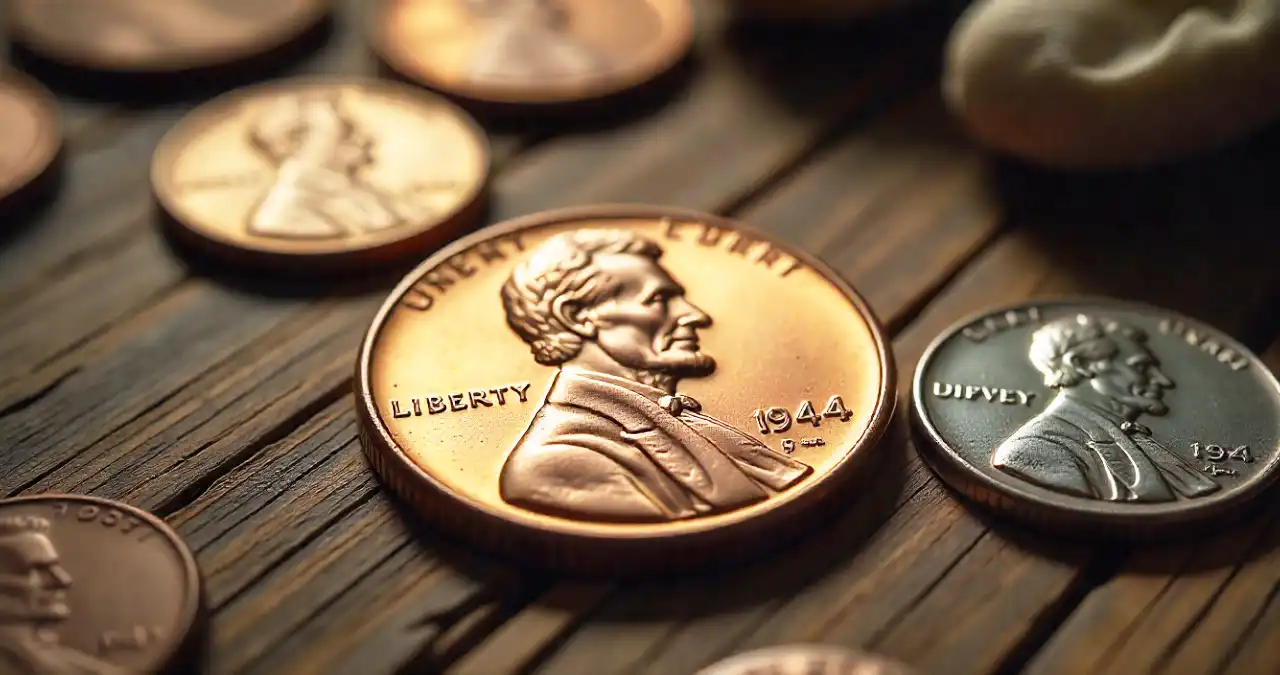

Have you ever checked your pocket change and wondered if that old penny could be worth more than face value? The 1944 wheat penny is one of the most collected Lincoln cents, and for good reason. It sits at the crossroads of U.S. history—minted during World War II when copper and steel shortages shaped America’s coin production.
Here’s the problem: most 1944 wheat pennies are so common they’re worth just a few cents in circulated condition. Collectors often assume they’ve stumbled on a fortune, only to be disappointed.
But the opportunity lies in the details. While ordinary coins may only fetch a small premium, rare errors—like the 1944 steel wheat penny—can sell for thousands of dollars. The difference between pocket change and a payday often comes down to condition, composition, and mint mark.
So, what exactly is the 1944 wheat penny value today? In this guide, you’ll learn the key factors that influence pricing, how to spot rare variations, and what your coin could realistically be worth in today’s market.
History of the 1944 Wheat Penny
Transition from Steel to Copper (1943–1944 Minting Change)
In 1943, U.S. pennies were struck from zinc-coated steel instead of copper, since copper was reserved for ammunition and military supplies. By 1944, the Mint switched back to using recycled shell casings made of copper and brass. That’s why most 1944 pennies are bronze-colored, while the steel 1944 wheat penny is a rare error coin.
Mint Locations (Philadelphia, Denver, San Francisco)
The 1944 wheat penny was minted at three locations:
- Philadelphia (no mint mark)
- Denver (“D” mint mark)
- San Francisco (“S” mint mark)
Together, over 1.4 billion coins were produced, making 1944 one of the highest mintage years for Lincoln cents.
Why the 1944 Penny Is Historically Significant
This coin reflects a critical moment in U.S. history. It marked the end of steel pennies and the return of copper coins during wartime. Collectors value it not only for rarity but also for its historical connection to World War II.
How Much Is a 1944 Wheat Penny Worth?
Average Circulated Value
Most 1944 wheat pennies found in pocket change are heavily circulated. These usually sell for 2 to 10 cents each, depending on wear.
Uncirculated & Mint State (MS) Grading Values
Coins graded MS-60 to MS-67 by professional grading services like PCGS or NGC are far more valuable. High-grade examples can fetch $50 to $500+ depending on luster, strike, and eye appeal.
1944-S, 1944-D, and 1944 (No Mint mark) Differences
- 1944 (Philadelphia, no mint mark): Most common, worth only a few cents in circulated condition.
- 1944-D (Denver): Slightly scarcer; uncirculated coins worth more than Philadelphia examples.
- 1944-S (San Francisco): Lower mintage, making it more collectible.
Condition vs. Estimated Value
| Condition | 1944 (No Mint mark) | 1944-D | 1944-S |
| Good (G-4) | $0.05 | $0.05 | $0.10 |
| Fine (F-12) | $0.10 | $0.10 | $0.25 |
| Extremely Fine (XF-40) | $0.25 | $0.25 | $0.50 |
| Uncirculated (MS-60) | $5 | $6 | $8 |
| Gem Uncirculated (MS-65) | $15 | $25 | $40+ |
Rare 1944 Wheat Penny Varieties & Errors
1944 Steel Penny (Extremely Rare)
A handful of 1944 steel pennies were struck in error using leftover 1943 steel planchets. These are among the rarest U.S. coins and can sell for $100,000+ depending on grade.
1944-D Over D (RPM Error)
Some Denver coins show a repunched mintmark (RPM), where the “D” was stamped twice. These varieties are collectible and worth $20 to several hundred dollars, depending on grade.
Double Die Errors (Obverse/Reverse)
Coins with noticeable doubling in the date, lettering, or wheat stalks are worth more. Prices range from $50 to $1,000+ depending on severity and condition.
Off-Center Strikes & Other Minting Errors
Off-center strikes, clipped planchets, and die cracks also boost value. Minor errors might bring $10–$50, while dramatic ones can exceed $500.
Top 5 Most Valuable 1944 Pennies:
- 1944 Steel Penny – up to $150,000
- 1944-S Steel Penny – even scarcer, up to $200,000
- 1944-D Over D RPM – up to $1,000+
- 1944 Double Die – up to $1,500
- High-grade 1944-S (MS-67) – up to $5,000
Factors That Affect Value
Coin Condition & Grading Scale
The 70-point Sheldon grading scale determines value. A coin in “Good” condition may be worth only cents, while a Mint State 67 example can sell for thousands.
Rarity & Mint Errors
Rare varieties like the steel penny or RPM errors are much more valuable than common strikes.
Collector Demand & Market Trends
Prices fluctuate with numismatic interest, auction results, and overall demand for Lincoln cents.
How to Identify and Grade Your 1944 Wheat Penny
Step-by-Step Guide
- Check the date and mint mark (under the date).
- Inspect for errors or doubling with a magnifier.
- Compare condition to coin grading charts.
Tools You Need
- Magnifier (10x)
- Coin scale (to check weight: copper ~3.11g, steel ~2.7g)
- Grading reference book or online guide
When to Get Coins Professionally Graded
If your coin appears uncirculated, has doubling, or looks like steel, send it to PCGS or NGC for authentication.
Where to Buy or Sell 1944 Wheat Pennies
Local Coin Shops & Dealers
Trusted dealers can evaluate and offer fair prices for your coins.
Online Auctions
Websites like eBay and Heritage Auctions are popular places for selling rare pennies.
Coin Collecting Forums & Shows
Collectors often trade and buy at coin shows or online communities.
Tip: Avoid cleaning coins—this lowers value. Also, beware of counterfeit steel pennies coated to mimic rarity.
Conclusion
The 1944 wheat penny value can range from just a few cents to over six figures, depending on rarity, condition, and errors. While most coins are common, the rare steel penny and high-grade varieties can be life-changing finds.
If you have one, examine it carefully—or better yet, have it professionally appraised. Who knows? That little coin in your collection could be worth far more than you think.
FAQs About the 1944 Wheat Penny
How much is a 1944 wheat penny worth in 2025?
Most are worth 2–10 cents, but rare errors can reach $100,000+.
Is the 1944 steel penny real?
Yes, though extremely rare. Only a handful exist.
What’s the difference between 1944-D and 1944-S pennies?
They were struck at different mints; the “S” coins are scarcer and more valuable in higher grades.
How do I know if my penny is valuable?
Check for mint marks, condition, and errors. Professional grading confirms authenticity.
Should I clean my 1944 wheat penny?
No—cleaning reduces numismatic value.