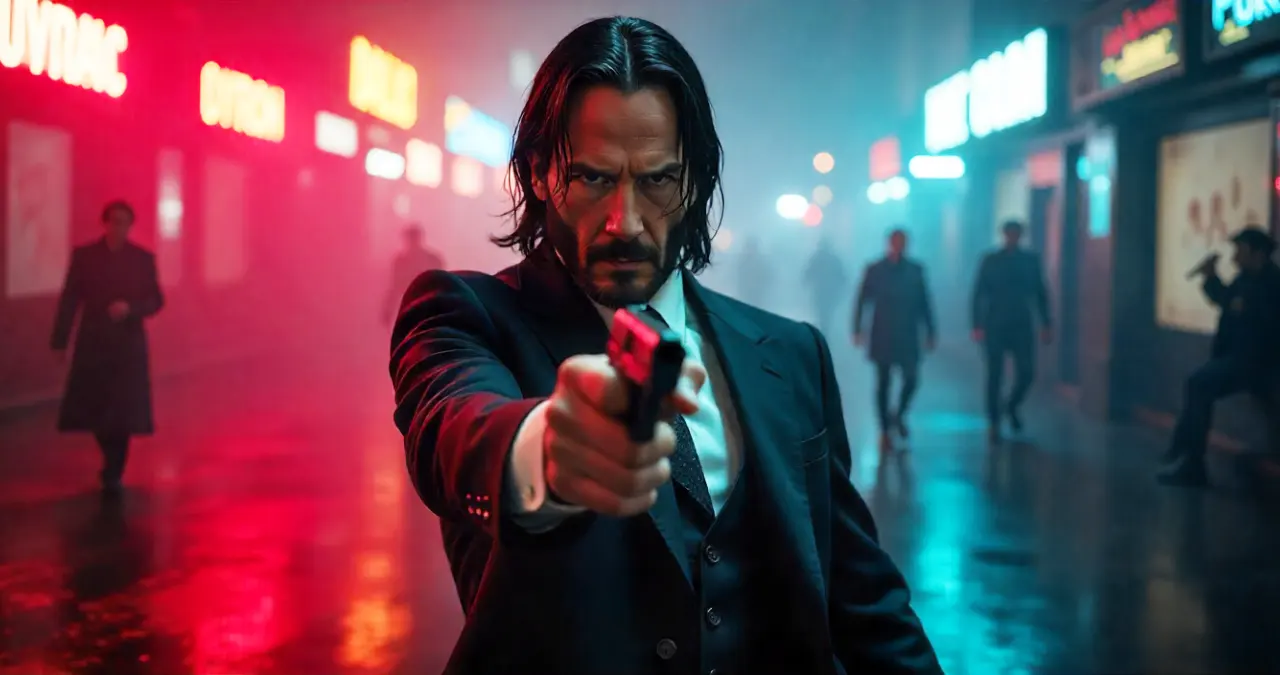

Remember that one movie that felt like a punch in the chest? That was John Wick: Chapter 1. It arrived as a sleek, bloody fable about a retired hitman dragged back into the underworld—simple premise, razor-sharp execution. But underneath the bullets and ballet-like fights sits a savvy business case: modest budget, targeted marketing, and a world that begged to be explored. That combination turned a risky action film into a global money-maker and a modern franchise blueprint.
Table of Contents
The Origins: From Niche Idea to Franchise Starter
Not every film that looks like an action exercise becomes a brand. John Wick began as an idea rooted in pure genre instincts—minimal exposition, maximum style. Studios initially treated it as a mid-range gamble. It wasn’t a superhero or an established IP; it was a new story leaning on the cool factor of its lead and the promise of a distinctive action language. That niche identity is part of the business brilliance: it could be marketed to hardcore action lovers while being fresh enough to catch mainstream curiosity.
Budget, Financing & Production Economics
Casting Choices and Their Financial Upside (Keanu Reeves)
Casting Keanu Reeves was both an artistic and financial masterstroke. He wasn’t a boom-boxing box-office guarantee at the time, but he carried credibility—action credibility, audience goodwill, and viral meme value. Economically, his involvement balanced salary demands with upside: he brought committed fans and a redemptive public image that the marketing team could amplify without paying A-list mega-fees.
Stunt Work, Choreography & Production Value
Investing in practical stunts and choreographers paid off. Rather than sink money into CGI spectacles, the filmmakers spent on training, fight choreography, and long-takes—choices that are cost-efficient relative to big VFX budgets and deliver high perceived value. The result? A production that looks expensive even if the line items were tightly managed—a hallmark of smart budgeting.
Distribution Strategy
Domestic Release & Marketing
Domestically, the film targeted moviegoers who crave visceral experiences—trailers emphasized mood and the promise of unique action. Instead of over-explaining plot, marketing leaned into icons: the dog, the suit, and Reeves’ steely stare. That created curiosity-driven attendance rather than broad but shallow reach.
International Release and Regional Strategies
Internationally, distributors leaned on universal codes: stylized violence, visual storytelling, and Keanu’s global recognition. Markets that adore action — South Korea, Russia, parts of Latin America — got strong promotional pushes. Localization meant subtitling trailers, emphasizing fight sequences in markets that respond to spectacle, and timing releases to avoid competition. This tactical rollout maximized opening grosses without huge additional spend.
Box Office Performance & Revenue Streams
Theatrical Box Office
Box office was the most visible success metric. The film’s theatrical returns outperformed expectations for a mid-budget action movie. The numbers signaled that when a film connects, the multiplier effect (good reviews → increased weekend legs → better word-of-mouth) can transform modest openings into solid runs.
Ancillary Revenue: VOD, Streaming, Home Video
The long tail is where steady cash flows in. DVD/Blu-ray collectors, VOD rentals, and later streaming licensing deals created multiple revenue layers. The film became a reliable catalog performer—cheap to license to platforms, attractive to action playlists, and often rediscovered whenever a sequel or reboot buzzed.
Merchandising and Licensing
While not Marvel-scale, John Wick’s iconography—guns, the Continental Hotel, the gold coin currency—lent itself to tasteful merchandise: posters, apparel, collectible prop replicas. Licensing deals for boutique items and collaborations with fashion labels increased visibility and opened boutique revenue channels.
Critical Reception vs. Commercial Success
How Reviews Shaped the Long Tail
Critics noticed the film’s choreography and worldbuilding. Patchy plot? Maybe. But critics and cinephiles highlighted craft, which helped the long tail. Positive critical framing made it more palatable for a broader audience, especially viewers who shop based on reviews.
Awards, Festivals, and Industry Buzz
While not an awards magnet, John Wick scored points at festivals and industry circles for revitalizing action cinema. That buzz translated into better press cycles and made industry players pay attention—producers, directors, and investors began to see action films as fertile ground for smart, contained investments.
Cultivation of Fanbase & Community
Fan Engagement: Conventions, Memes, and Fandom
The fanbase grew organically. Conventions, YouTube breakdowns of fight scenes, and memes amplified the film’s cultural footprint. Fans dissected choreography, props, and world rules; in short order the film went from “cool movie” to cultural shorthand for a certain kind of stylish violence.
Word-of-Mouth and Social Proof
The movie’s best marketing was word-of-mouth. People who saw it told friends: “You’ve got to see the church scene” or “the action feels different.” That peer recommendation created multi-week legs and reduced the need for expensive extended ad campaigns.
Franchise Potential and IP Strategy
Sequels, Spin-offs, and Expanded Universe
Studios learned fast: this world could keep generating stories without bloating budgets. Sequels expanded the lore—new assassins, hotels, and underground economies—while retaining the core style. Spin-offs and anthology ideas became low-risk ways to milk the IP, especially since the worldbuilding was a major audience draw.
Cross-media Opportunities (Games, Comics, TV)
Video games, comic-book prequels, and a possible TV series became natural extensions. These formats monetize fandom in different ways—microtransactions, serialized storytelling, or collectible issues—diversifying revenue and deepening fan engagement without costly theatrical risk.
Global Cultural Impact
Influence on Action Cinema Style
If cinema trends are fashion, John Wick set a trend: intimate, gun-fu choreography; slick, neon-noir production design; and storytelling economy. Filmmakers borrowed its visual grammar, pushing action toward practical stunts and longish takes—a stylistic shift that influences global productions.
Fashion, Music, and Pop-Culture Ripples
The film’s suits and aesthetic seeped into fashion editorials; playlists curated by fans found a new audience for moody electronic and orchestral hybrids. Even restaurants and bars named cocktails after the film—an example of cultural penetration small enough to be quirky, big enough to matter.
Business Lessons: What Studios Learned
Low-to-Moderate Budget, High-Return Model
One of the clearest takeaways: you don’t need a $200M budget to build a valuable franchise. A focused story, strong lead, and distinctive production design can create outsized returns. Studios saw the wisdom in backing smaller, well-crafted action films as portfolio diversifiers.
Building Brands Around Performance and Worldbuilding
Worldbuilding—creating rules, currencies, organizations—turned a single film into a serialized product. Brands can now be constructed not only around characters but around ecosystems, which can be extended across formats and merchandise.
Risks, Controversies & Backlash
Violence Debate and Ratings Considerations
Stylized violence can attract criticism. Studios had to navigate ratings boards and public scrutiny—balancing the visceral appeal while avoiding censorship or negative PR that could hurt box office in sensitive markets.
Saturation Risk & Franchise Fatigue
Too many sequels or spin-offs risk saturation. The business must balance supply—new content—and demand—audience appetite—to avoid fatigue. Smart scheduling and quality control became essential to retained value.
The Long-Term Financial Picture
Lifetime Revenues
Beyond opening weekend, lifetime revenue streams—streaming rights, catalog licensing, and ancillary products—turn a mid-budget film into a long-term asset. For IP holders, that means predictable yearly royalties and opportunities for reboots or anniversaries.
Resilience During Market Shifts (Streaming era)
Streaming changes the calculus. Films like John Wick benefit from platform deals that reintroduce them to new viewers, sustaining relevance. Studios increasingly factor in platform licensing when projecting ROI and negotiating distribution windows.
Conclusion
John Wick: Chapter 1 is more than an action thriller—it’s a business case study. It proves that a distinct creative vision, modest but smart budgeting, and a targeted marketing approach can build a global franchise. The film’s influence extends beyond box office receipts: it shaped aesthetics, launched cross-media experiments, and taught studios how to cultivate long-lasting IP without the cost of a tentpole. In short, it’s a masterclass in turning bold, focused filmmaking into sustainable commercial success.
Frequently Asked Questions
Q1: Did John Wick: Chapter 1 make a lot of money compared to its budget?
Yes. The film was financially successful relative to its production cost. Its strong box office return, combined with home video and continued streaming licensing, meant it was profitable and justified sequels.
Q2: Why was Keanu Reeves so important to the film’s business success?
Keanu brought credibility, a built-in fanbase, and a public image that marketers could leverage. He delivered the physicality needed for the film’s choreography, which reduced the need for expensive effects and increased audience trust.
Q3: How did John Wick influence other filmmakers?
It encouraged practical stunts, choreographed long takes, and minimalist storytelling in action cinema. Many filmmakers adopted its stylistic elements—saturated neon palettes, cocktail of close-quarters combat and gunplay, and focused, world-centric narratives.
Q4: What revenue streams made John Wick a long-term asset?
Theatrical box office, home video (DVD/Blu-ray), VOD/streaming licensing, merchandising, and cross-media deals (comics, games) all contributed to long-term profitability.
Q5: Can small-budget action films replicate John Wick’s success today?
Yes, but they must offer a strong unique selling point—distinct style, charismatic lead, or innovative worldbuilding. Smart budgeting, savvy marketing, and audience targeting remain key.